Philadelphia is Named the First Playful Learning City in the World
The Celebration on June 11 – International Day of Play – Unveils Philadelphia250 Playful Learning Installation on the Benjamin Franklin Parkway
Contact
Rachel Ezekiel-Fishbein (Playful Learning Landscapes), 267.679.2463, rachel@makingheadlinespr.com
Leo Manning (Center City District), 215.440.5500, pr@centercityphila.org
PHILADELPHIA (May 28, 2026) — City of Brotherly Love, Birthplace of Liberty, Die-Hard Sports Town, Cellicon Valley. Now Philadelphia can add a new moniker: on June 11, 2026, International Day of Play, Playful Learning Landscapes will proclaim Philadelphia the world’s first Playful Learning City, a distinction that invites visitors and residents to explore a new side of Philly.
“We’re proud that Philadelphia has been named the world’s first Playful Learning City,” said Angela Val, president and CEO of Visit Philadelphia. “As millions of visitors travel to Philadelphia this summer, this recognition helps reinforce that our city is a place where families can learn, explore and play together.”
Playful Learning combines the joy of play with goal-driven learning to promote cognitive, social and emotional growth in children ages 0-8. When integrated into everyday spaces like parks, bus stops, libraries and sidewalks, Playful Learning increases access to high-quality learning and closes gaps in school readiness and academic performance. By design, Playful Learning uses science-based principles to engage parents and caregivers in this joyful experience with their children, enhancing shared time.
“Philadelphia is the birthplace of America and of Playful Learning,” says Sarah Lytle, PhD, executive director of Playful Learning Landscapes, which works with communities internationally to create public spaces that are thoughtfully designed to spark children’s learning through play. “The concept of building Playful Learning into public spaces was born in Philadelphia. For the past decade, a tireless team of advocates has worked together to fund, design and build a network of installations that are accessible to children and families across the city. This has resulted in the most comprehensive collection of Playful Learning installations in the world and the first pilot of Playful Learning in affordable housing.”
Supporters of Philadelphia’s Playful Learning movement include: multiple community groups, design firms, developers, and fabricators, Philadelphia Parks & Recreation, the William Penn Foundation, City Councilmembers Anthony Phillips and Jeffery Young, the Free Library of Philadelphia, Temple University, Watchdog, Playful Learning Landscapes, and Masters Group Design.
“I’ve seen Playful Learning around the world, and Philadelphia truly is the world’s Play Place,” says Kathy Hirsh-Pasek, PhD, the Temple University professor and Brookings Institution senior fellow who created the revolutionary idea of building Playful Learning into the architecture of communities. “Philadelphia is home to more than 70 Playful Learning installations, because the concept has been championed here by community groups, city officials, funders, developers and architects.”
A Network of Playful Learning Installations to Celebrate
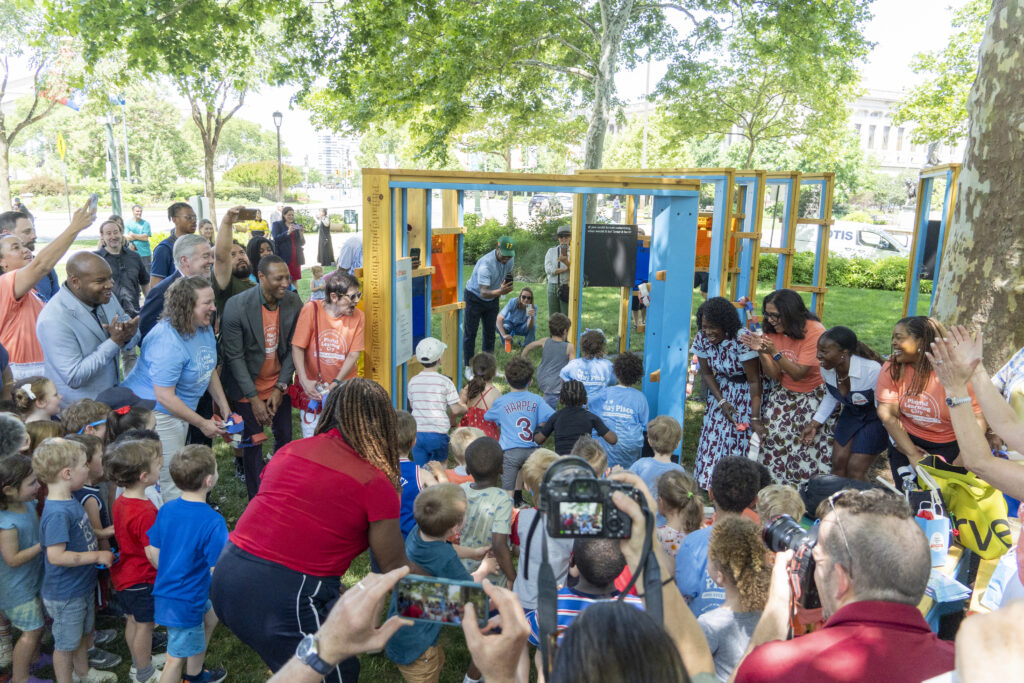
Philadelphia will celebrate the semiquincentennial and becoming the world’s first Playful Learning City by unveiling The Play Place Launch Pad in Sister Cities Park on the Benjamin Franklin Parkway, an immersive, hands-on Playful Learning hub that connects visitors to Philly-born innovation and inventions by children, and invites them to create their own inventions. The concept and design were inspired through engagement with Philadelphia children at events across the city.
“I have fond memories of my son and daughter playing in this very park, and I know firsthand the joy it sparks,” said Center City District president and CEO Prema Katari Gupta. “Sister Cities Park is a reminder that great public spaces don’t just serve a neighborhood, they shape childhoods. What better moment to open a space like this than when people from around the country and the world are experiencing Philadelphia for the first time this summer.”
Central to Playful Learning is collaboration between developers, designers and the community to ensure each installation reflects neighbors’ experience, history, culture and values. Partners in The Play Place include: Philadelphia Funder Collaborative for the Semiquincentennial, William Penn Foundation, Playful Learning Landscapes, Watchdog, Fifteen Architecture + Design, Center City District, Philadelphia Parks & Recreation, Visit Philadelphia, Weston Design & Fabrication Studio, FutureTogether, Masters Group Design and Making Headlines PR.
A network of 10 Play Places in top tourist destinations pulls from existing installations across the city to showcase how each community brings Playful Learning to life in this city of neighborhoods. Sites include: The Philadelphia Zoo, The Parkway Path, The Franklin Institute, Shakespeare Park, Love Park, Dilworth Park, The Reading Terminal Market, Franklin Square, The National Constitution Center, and Elfreth’s Alley.
“The William Penn Foundation believes that high-quality public spaces can perform many important functions, including supporting the education of young people through Playful Learning – a concept that originated here in Philadelphia, the city of ‘firsts,’” said Shawn McCaney, executive director of the William Penn Foundation, which has been a lead funder for Philadelphia Playful Learning installations. “We also believe that we need to help spread innovative and beneficial ideas to the nation and the world, and we are excited to help make Philadelphia the global model for Playful Learning.”
How to Become the Next Playful Learning City
By 2050, ~70 percent of the world’s population will live in cities. Playful Learning Landscapes created the Playful Learning City designation to help families discover the best places to visit and live – cities that embrace Playful Learning and inspire families to learn together through play in public spaces.
“Kids are a big part of the population, yet cities are seldom built with kids in mind,” says Lytle. “Philly has shown exemplary leadership by reimagining its public spaces and investing deeply in creating accessible spaces citywide where families and communities can come together to play and learn.”
In designating future Playful Learning Cities, Playful Learning Landscapes will look at quality, accessibility and local support. The application asks cities to show that their Playful Learning installations:
- Reflect local values, culture and the science of Playful Learning, and incorporate one or more learning goal(s); and
- Are accessible to all families, in terms of free access, universal design, language, and location.
Cities must also demonstrate broad, diverse support from some combination of city officials, funders, community groups and/or businesses.
Applications to become a Playful Learning City will open on September 1 at Playful Learning Landscapes.
Sponsors for the International Day of Play opening of The Play Place include: National Constitution Center, Community Ventures, Watchdog and Philadelphia Housing Authority
###
Center City District, partner to property owners and downtown stakeholders, is the steward and advocate for a clean, safe and thriving Center City Philadelphia. Find us at www.centercityphila.org.