CPDC Meeting Recap: Revitalizing Market East
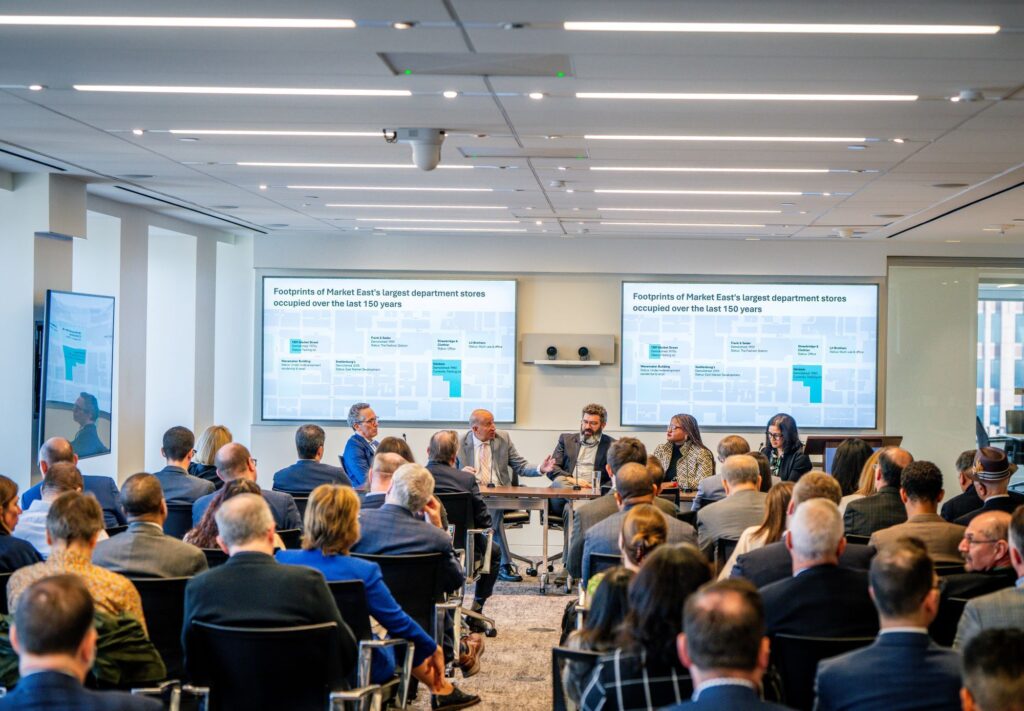
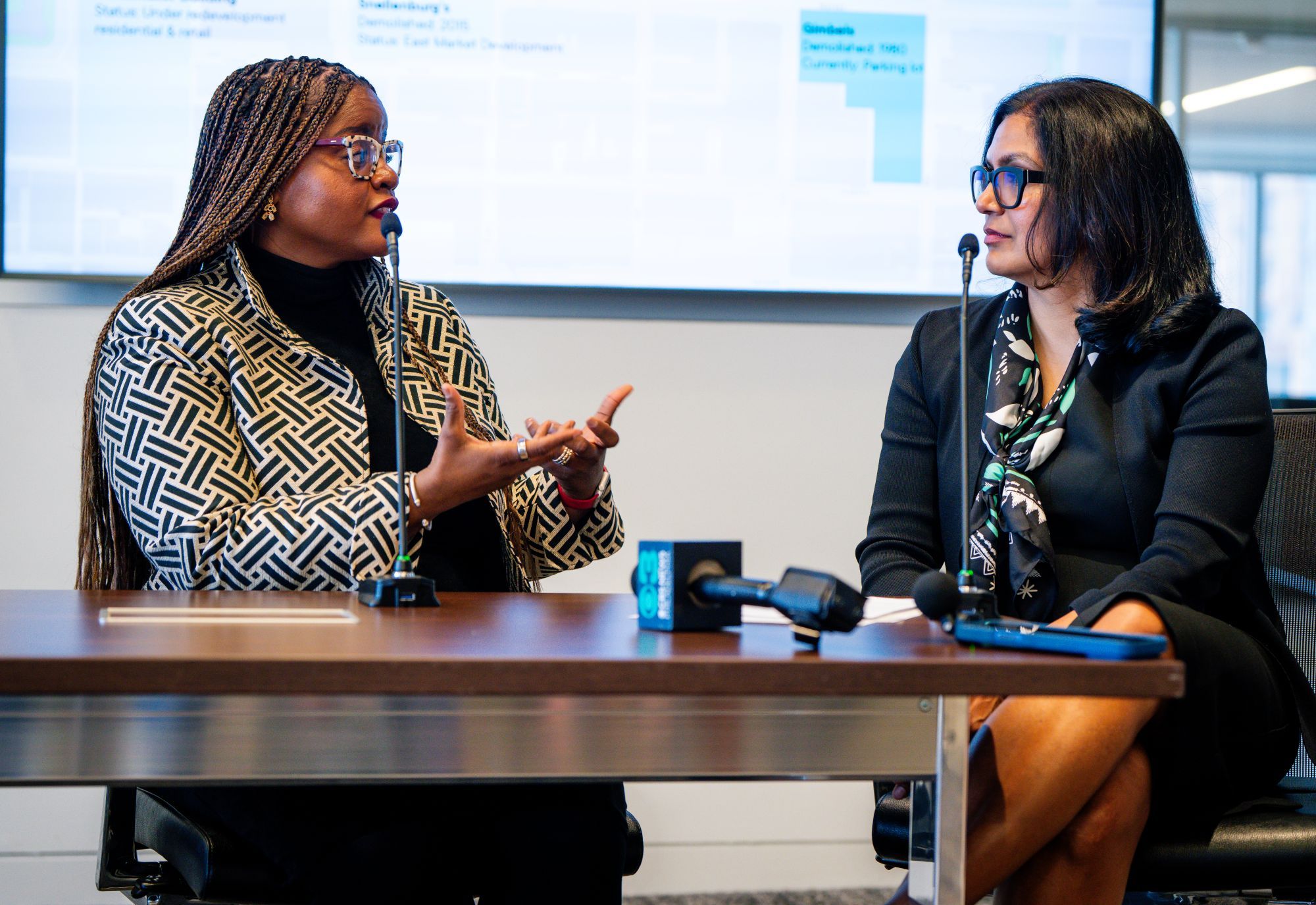
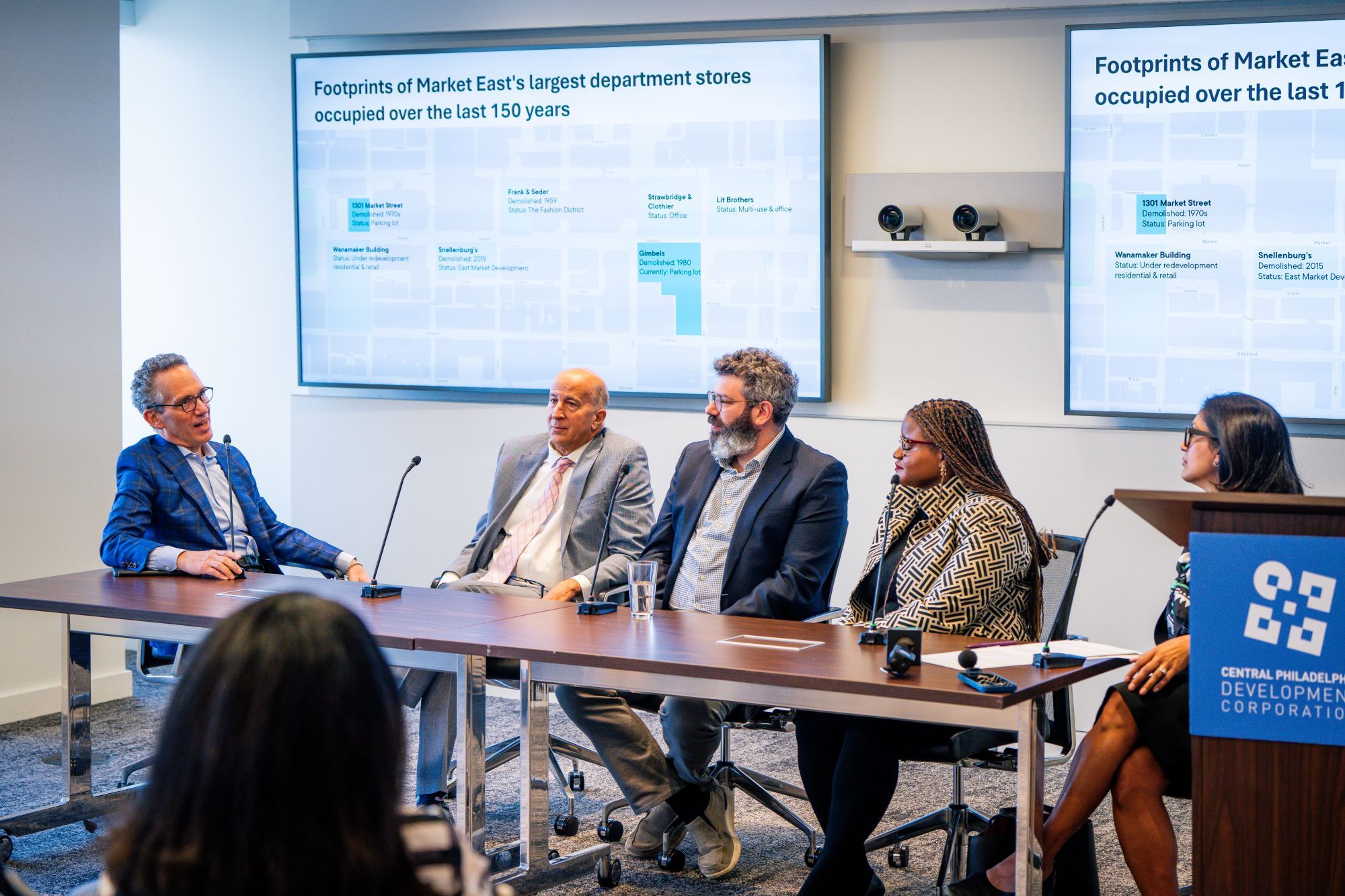
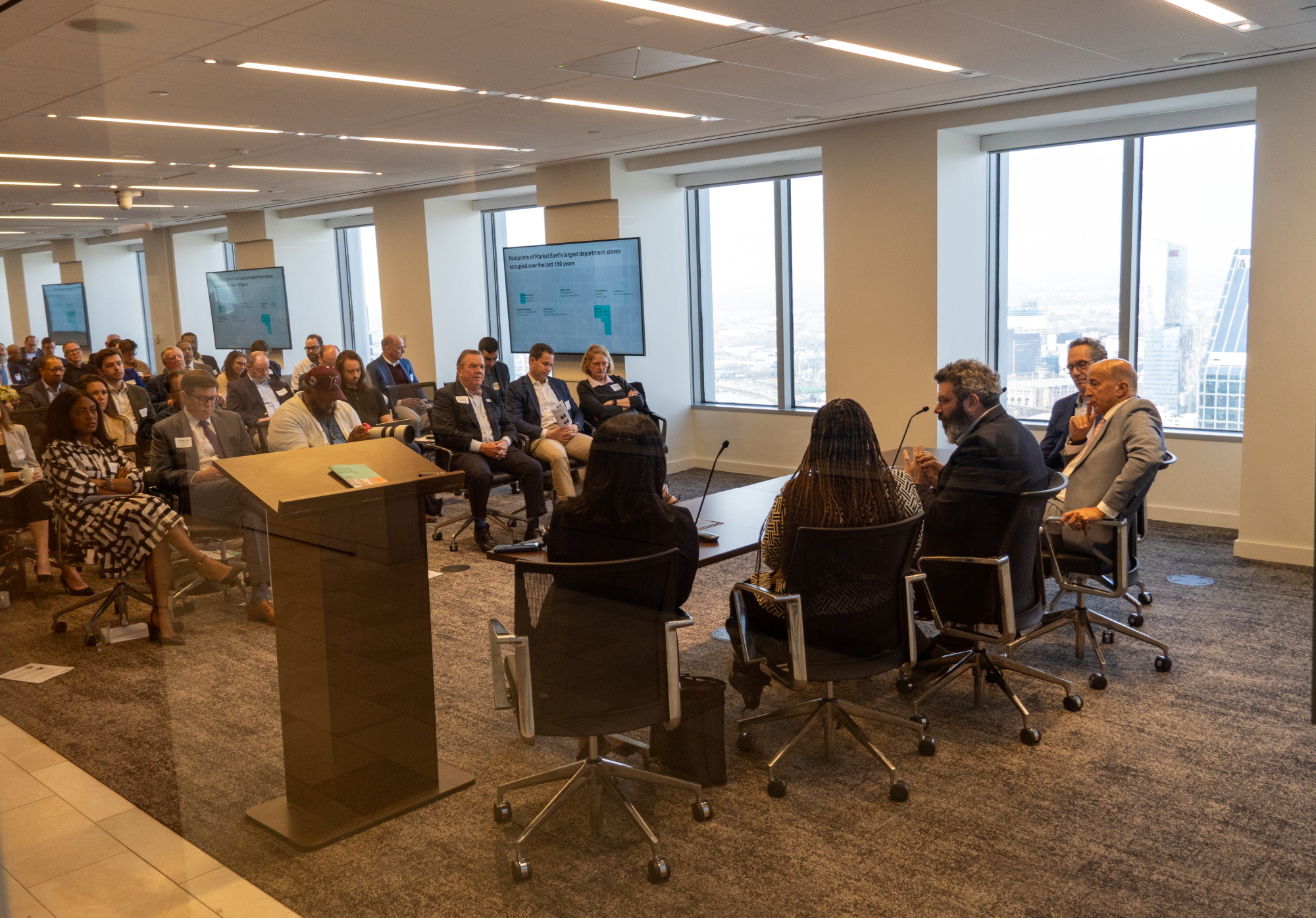
At the March 2026 CPDC membership meeting, Center City District’s Vice President of Economic Development, Clint Randall, presented highlights from the newly released real estate development report before turning the floor to CCD President and CEO Prema Katari Gupta, who outlined a set of short- and long-term initiatives for the Market East corridor. A panel of civic and development leaders then explored what it will take to transform Market East into a vibrant, inclusive destination in time for the 2026 World Cup, the Semiquincentennial, and well beyond.
Panelists:
- Tiffany Thurman, Chief of Staff to Mayor Cherelle L. Parker;
- Councilmember Mark Squilla, Philadelphia City Council;
- Josh Rosenblum, Partner, Morningside Heights;
- Rob Zuritsky, President & CEO, Parkway Corporation; and
- Prema Katari Gupta (moderator), President & CEO, Center City District
Read along for highlights from this program and learn more about how you can get involved with CPDC.
The State of Center City Real Estate
Randall opened the meeting with an overview of CCD’s interactive real estate development report, which tracks private development projects across Center City and adjacent neighborhoods. The report includes over 60 projects representing a collective investment of $2.1 billion, a strong indicator of continued market confidence in Center City Philadelphia.
Randall noted that while interest rates and capital markets have created headwinds, conditions are showing signs of improvement, with several large-scale projects advancing. He also highlighted the role of strategic public investments, including Thomas Paine Plaza, Dilworth Park, and a new pedestrian bridge linking South Street to the Delaware River waterfront, in catalyzing private development and creating new submarkets for investment. The redesign of blocks between 2nd and 6th streets in Old City, he added, could offer a useful model for thinking about Market East.
Short-Term Initiatives for Market East
Gupta detailed a targeted set of near-term activations designed to transform the look and feel of the Market East corridor ahead of this summer’s activities.
Thanks to a $1.85 million grant from the City of Philadelphia, CCD is undertaking a comprehensive streetscape refresh along Market East, including:
- Planting 42 new trees
- Refurbishing four transit headhouses and 21 bus shelters
- Painting light and banner poles
The physical improvements will be complemented by a temporary public art program featuring original work by Philadelphia artists, with installations planned for nearly every block. The first piece by Manuela Guillén will be installed in the coming weeks, with the full set of installations in place by mid-May.
CCD is also partnering with Meantime Philadelphia to activate several currently vacant storefronts on the 900 block of Market Street with local, diverse businesses. The storefronts are being upgraded and donated by Harris Blitzer Sports & Entertainment, Comcast, and Fashion District Philadelphia, with the goal of opening by early May.
Long-Term Vision and Planning
The panel discussion turned to the bigger picture: what does a truly revitalized Market East look like, and how do we get there?
Rosenblum stressed the importance of establishing a clear, long-term planning process, one that codifies development goals and incentives through legislation to create the predictability that private investment requires. Zuritsky pointed to the need for new office space, entertainment uses, and residential development to generate the density and activity that can sustain a thriving corridor.
Thurman brought a community-centered perspective, emphasizing that a successful Market East must foster a genuine sense of belonging, not just for visitors and workers, but for Philadelphia residents. She underscored the importance of transit-oriented development and regional connectivity as foundational elements of that vision.
Squilla reinforced the role of the public sector in enabling change, noting that the right combination of incentives and infrastructure investments will be critical to attracting development and reshaping the corridor. The panel also discussed the potential long-term implications of autonomous vehicles and the need to thoughtfully balance transportation infrastructure with activated public space.
Throughout the discussion, panelists agreed: short-term activations and experiments are essential not just as ends in themselves, but to test, learn, and build the case for longer-term transformation.
Public Safety, Homelessness, and the Path to Revival
A significant portion of the meeting addressed the interconnected challenges of public safety and homelessness on Market Street and the progress being made.
Attendees noted the meaningful impact of increased police presence on the corridor, crediting the police commissioner for measurable improvements. The district attorney’s proactive approach to charging lower-level offenses has also been felt positively by area retailers. These near-term public safety investments are being supported with real, sustained funding to ensure continuity through 2026 and beyond.
On the homelessness front, the nearly 1,000 new shelter bed units, with a significant additional announcement expected in the upcoming budget address. A $500,000 investment from multiple partners is supporting mental health and homelessness services in the area.
Gupta closed the meeting by highlighting the work of CCD’s own homeless outreach team, which connected 205 individuals with services in 2025, a testament to the power of sustained, trust-building support as part of a comprehensive strategy for downtown recovery.
The panelists and attendees alike expressed optimism about Market East’s trajectory. As Thurman noted, the goal isn’t just to “reimagine” the corridor; it’s a full revival, rooted in collaboration between the public and private sectors, sustained investment, and a commitment to making Market East a place where all Philadelphians feel they belong.
Interested in joining our next exclusive event? Learn how you can become a member of the Central Philadelphia Development Corporation and attend our member-only events and panels.
Get involved
Interested in attending our next exclusive event? Learn how you can become a member of the Central Philadelphia Development Corporation and attend our member-only events and panels at joincpdc.org or contact Lauren Smith, Director of Research & Special Projects, at cpdc@centercityphila.org.