blog
CPDC Membership Meeting Recap: Transformational Projects Reshaping Center City
CPDC closed out 2025 with a forward-looking discussion about projects set to transform Philadelphia’s image on the world stage and enhance the cultural, employment, and recreational offerings of Greater Center City: the successful launch of Calder Gardens, the proposed redevelopment of Hamilton and Furness halls, and the steady progress being made on Penn’s Landing Park. Following the discussion, Center City District’s Clint Randall, Vice President of Economic Development, presented key findings from two newly released reports: Center City Retail Report 2025 and Who’s Moving to Center City?
Speakers:
-
Bill McDowell, Building Committee for Calder Gardens
-
Lindsey Scannapieco, Managing Partner, Scout
-
Lizzie Woods, Senior VP, Strategic Planning and Real Estate Development, Delaware River Waterfront Corporation
Read along for highlights from this program and learn more about how you can get involved with CPDC.
Design and Impact of Calder Gardens
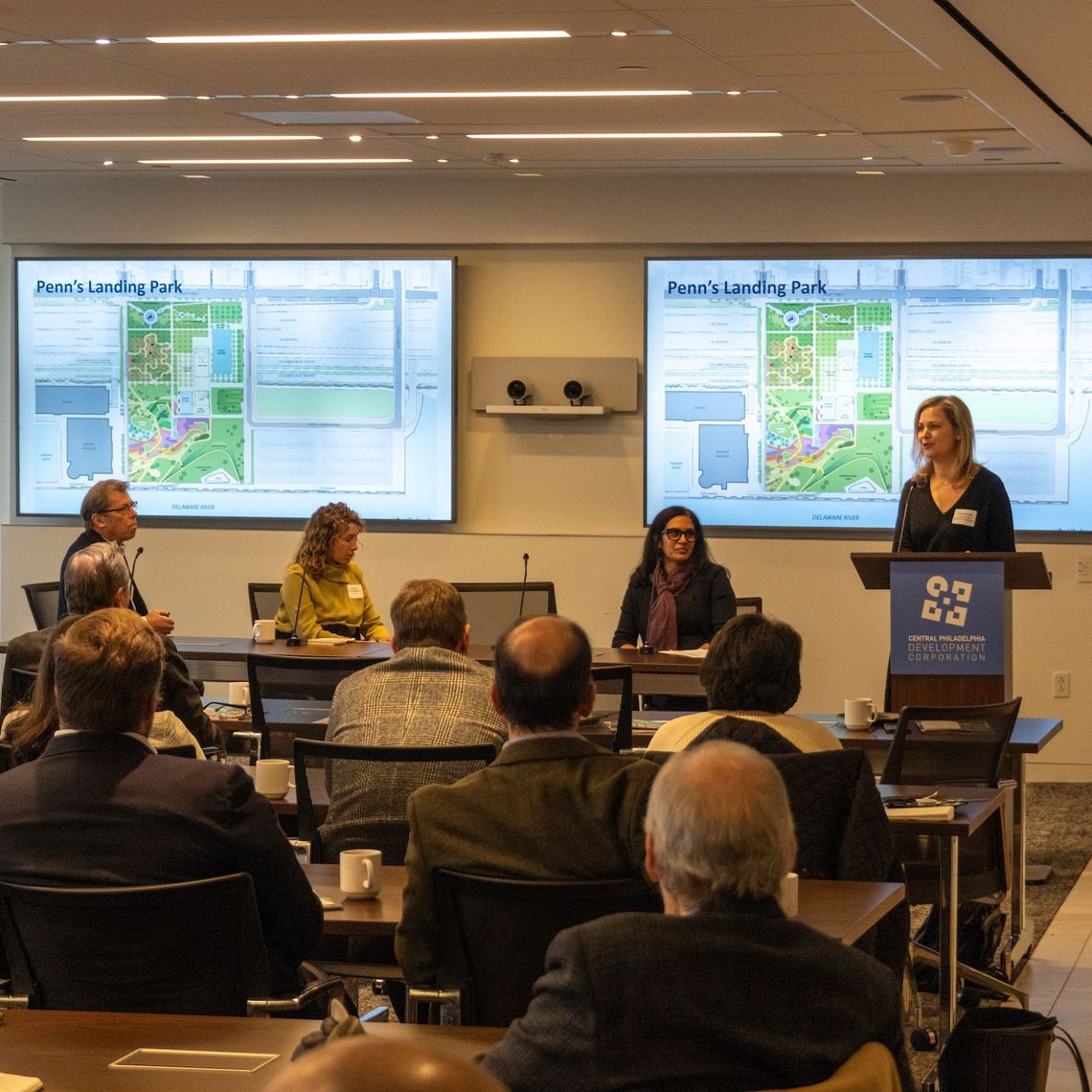
Bill McDowell, Chair of the Building Committee for Calder Gardens, presented the garden’s history, construction process, and current-day impact. “I am amazed at the appetite for cultural opportunities,” McDowell expressed during the panel, noting the museum’s current popularity. Since its opening, Calder Gardens has already begun to see thousands of ticket reservations, a testament to what McDowell sees as unmet demand: "Center City Philadelphia has amazing offerings that we fail to market properly." The addition of Calder to the string of cultural institutions along the Parkway takes the city’s art offerings to new heights.
Collaborating with Calder’s grandson, Sandy Rower, and Swiss architects Herzog & de Meuron, McDowell’s team aimed to create a reflective, continuous space to house Calder’s sculptures. The Parkway proved the ideal location. Surrounded by arts and cultural institutions, the museum's design offers a striking contrast to classical museum architecture, with modern natural and concrete lines set against a backdrop of stone-clad buildings. Today, approximately 30 sculptures are on display and rotate seasonally.
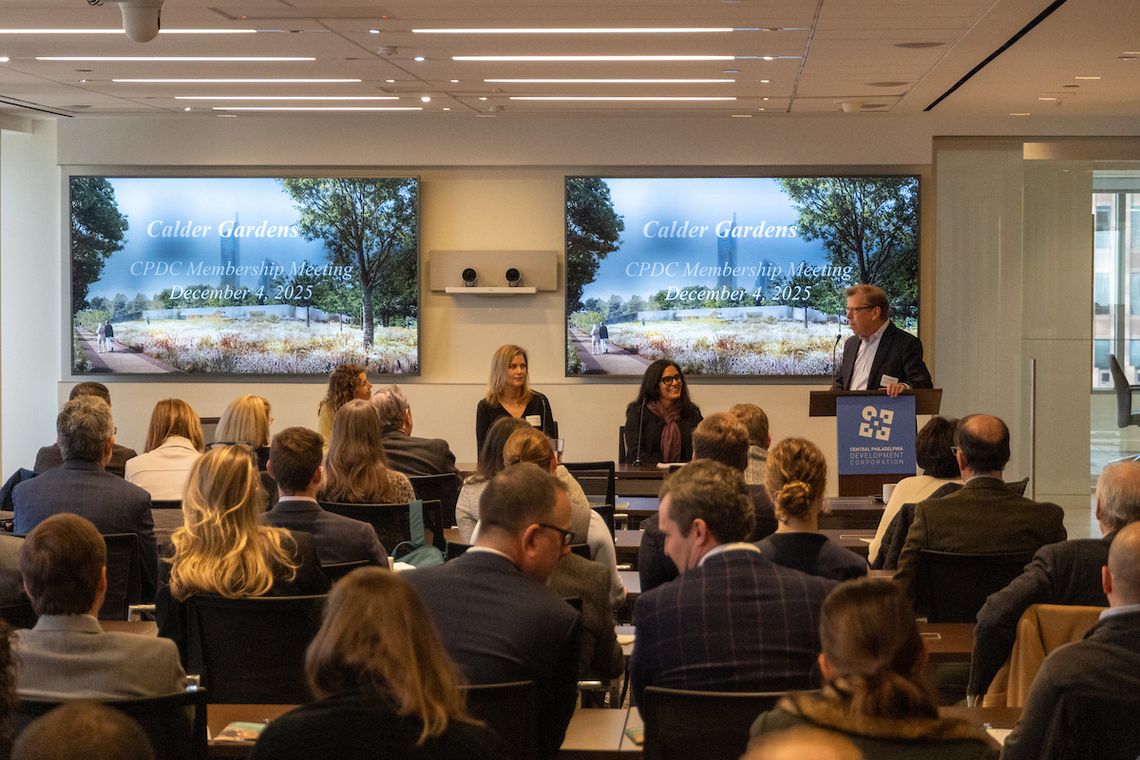
The construction itself required painstaking attention to detail. The museum's partially underground structure presented unexpected challenges when flooding during Hurricane Ida delayed progress, forcing the team to dig deeper and build a substantial foundation with steel and poured concrete. Yet this time-intensive work proved essential, allowing for what McDowell called the "unbelievable craftsmanship" of both the Swiss and Philadelphian teams. Landscape designer Piet Oudolf contributed his expertise by planting 40,000 perennials, shrubs, and trees throughout the garden. In the spring, 20,000 tulips will bloom, bringing vibrant color to the Parkway.
Revitalization of Hamilton and Furness Halls
Following the closure of the University of the Arts (UArts), questions have emerged about the future of the stretch of Broad Street it once occupied. With 600,000 square feet of real estate suddenly available, what does this mean for the Avenue of the Arts? Lindsey Scannapieco and her team at Scout are stepping up to answer that question through their planned renovation of Hamilton and Furness halls.
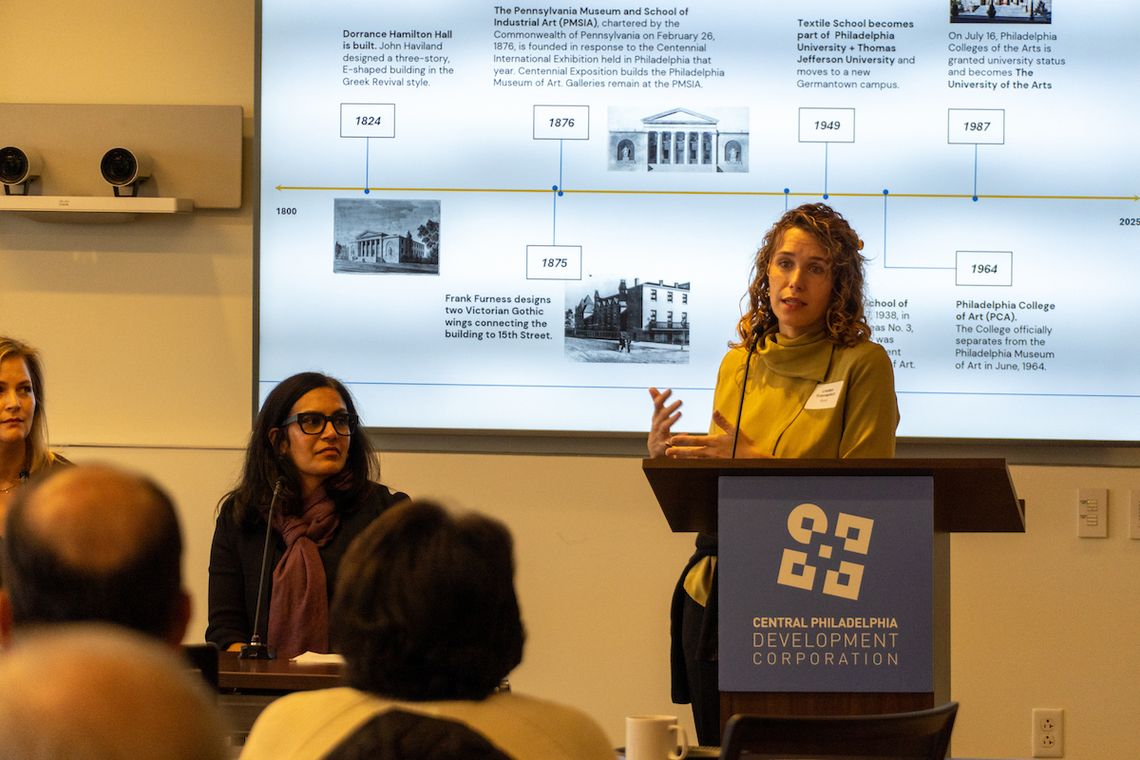
Scannapieco believes it is essential to use this development – in the oldest remaining building on Broad Street - as an opportunity to keep artists in Philadelphia. Guided by this principle, she and her team plan to maintain the building's dual purpose as both art studio space and artist housing. The pre-existing student dormitories will be converted into 35 units of affordable apartments for artists at 60-80% of the area median income, along with 10 units available for shorter, 30-day residencies. The building’s existing 10,000 square feet of workshop space, including a metal foundry and ceramic studio, will remain operational.
To build momentum and support, Scout has launched early activations such as Frankie's Summer Club, an outdoor pop-up bar, and public visioning workshops. These initiatives allow people — including potential funders — to see the long-term vision firsthand. Throughout the process, Scannapieco has emphasized an important principle: "Don't tell other people's histories within a space; provide a platform for them to share their story."
Waterfront Development and Progress at Penn’s Landing Park
With over 700,000 visitors in 2024, the Delaware River Waterfront has become a major destination for Philadelphia residents and tourists alike. Lizzie Woods, Senior Vice President of the Delaware River Waterfront Corporation, provided a look into her team's ambitious next project: Penn's Landing Park, developed in partnership with PennDOT.
Set to open in 2029, the park will span 12 acres and partially cap the I-95 expressway. While the majority will be landscaped green space, the design also includes a pavilion, café, water feature, and playground. In the summer, the area next to the pavilion will be used as a plaza, which will turn into an ice rink for the winter.
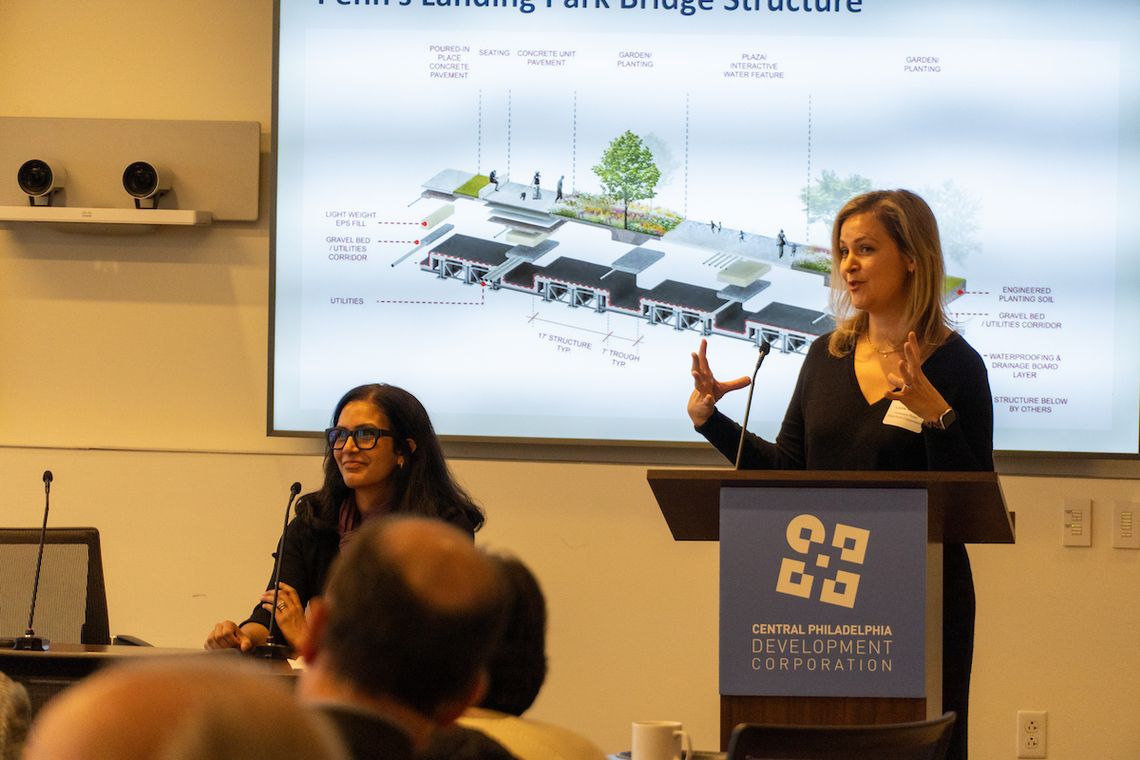
Creating such an expansive project over an active highway has presented significant engineering challenges. Planting trees on the bridge structure, for instance, requires a complex system of troughs to be installed that accommodates both utilities and sufficient depth for trees to establish roots. Woods noted that 340 trees are currently growing at a facility in Maryland, specially cultivated to reach precisely the right weight for placement on the bridge.
At the heart of her work, Woods envisions this project addressing both the psychological and physical barriers that have long separated the city from its waterfront. By creating a more accessible and welcoming space, the park aims to strengthen connections between Philadelphians and the Delaware River. Her guiding philosophy is straightforward: if you design with residents in mind, visitors will like it, too.
Key Takeaways from the Center City District’s Recent Reports
Finally, Clint Randall, VP of Economic Development at Center City District, presented CCD’s most recent reports. Center City District's annual Retail Report shows that downtown storefronts increased this year, with 133 new businesses opening in 2025. Center City is also the epicenter of the region's spending power: eight of the ten wealthiest ZIP codes in the 11-county Philadelphia region are within or adjacent to Center City, creating a uniquely high concentration of wealth within walking distance of its retail corridors. To learn more, read the full report here: Center City Retail Report, November 2025.
CCD’s newest piece answers the question, Who’s Moving to Center City? CCD conducted a survey across two dozen buildings containing 4,600 units and received nearly 700 responses that help us understand who is moving here and why, what they do for work, and how they get around. Notable findings include the fact that 44% of all respondents came from outside of our region, a majority of residents do not own cars, and nearly two-thirds expect to still be renting or owning a home in Philadelphia 3-5 years from now. Read the full report at the link above, or check out recent coverage in PhillyVoice and The Philadelphia Inquirer.
Get Involved
Interested in attending our next exclusive event? Learn how you can become a member of the Central Philadelphia Development Corporation and attend our member-only events and panels at joincpdc.org or contact Lauren Smith, Director of Research & Special Projects, at lsmith@centercityphila.org.